A Lane Forged in History
Vulcan Lane first appeared in Felton Matthews’ plan of Auckland in 1841 — a narrow, unnamed service alley of muddy earth, linking Queen and High Streets and serving as a back passage to the merchant houses of Shortland Crescent. It had no name, no paving, and no particular promise. That changed in 1846, when a blacksmith named James McLeod installed a smithy at the High Street corner and called it the Vulcan Forge — a nod to the Roman god of fire and metalwork, patron of craftsmen and the hearth. By 1850, “Vulcan Lane” had become the name on everyone’s lips, even if it was never officially bestowed by the city.
The mid-1800s brought artisans’ workshops, grog shops and merchants to the lane. A fire in 1850 destroyed much of the area, reshaping the commercial heart of Auckland and shifting its centre of gravity toward Queen Street. From that rubble, the lane found its character: strategically placed between old and new, it became a thoroughfare of lawyers, traders and those seeking a drink. The Queen’s Ferry Hotel opened in 1865; the Occidental Hotel followed in 1870 — both still standing today.
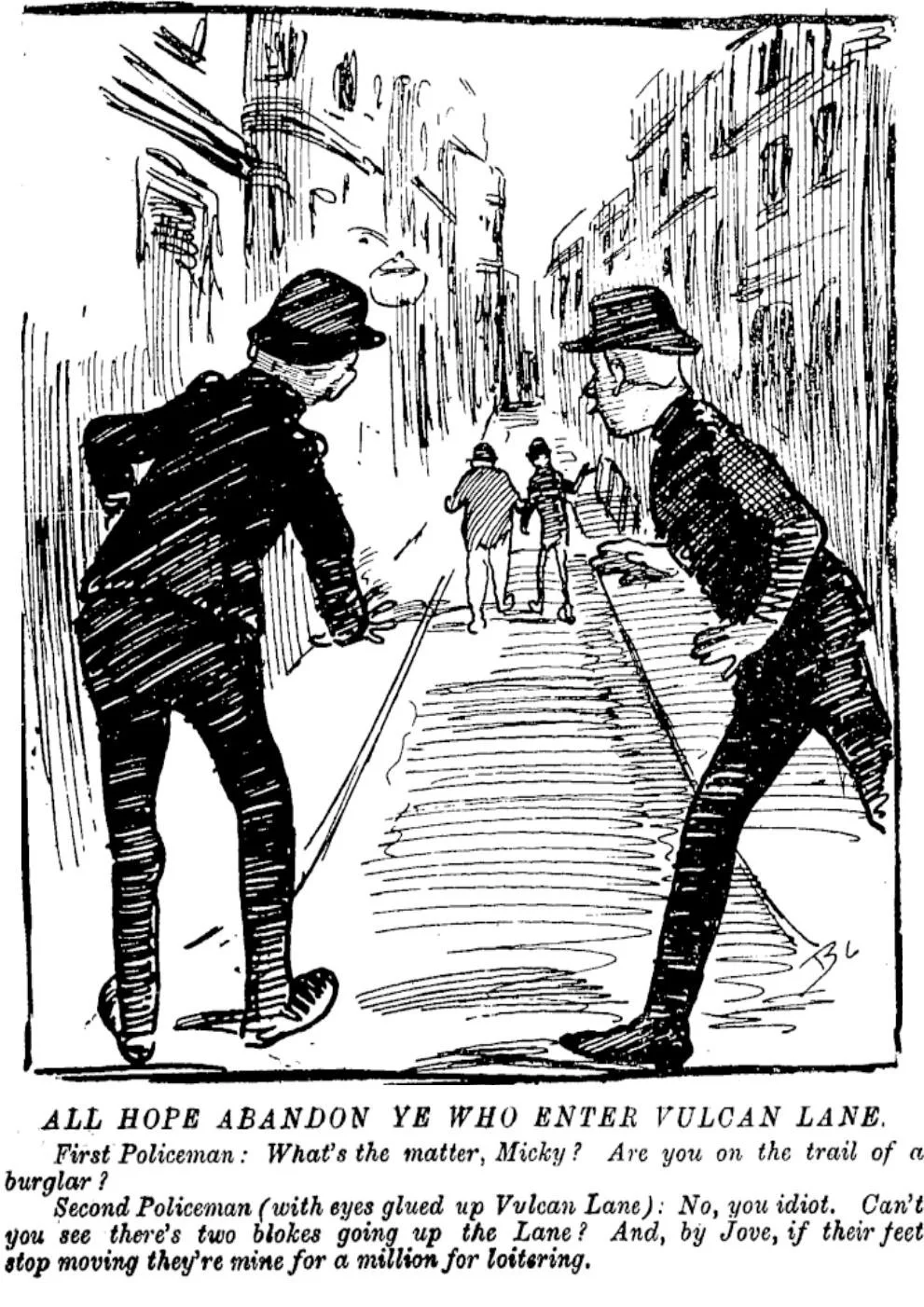
By the 1890s, the lane had a reputation — notorious as a place of “evil population” according to the press of the day, yet still home to barristers, solicitors and professional offices. In the 1920s it was widened, sunlight let in, and new buildings rose along more spacious lines. Commerce flourished through the following decades until post-war motor traffic crowded out pedestrians. In 1967, the council invested in paving the lane for foot traffic only — and Vulcan Lane as we know it was born.
Today, the lane is a Heritage New Zealand listed historic area — recognised for its significant contribution to Auckland’s inner city in terms of streetscape, character, and as a social drawcard. From that first unnamed muddy track in 1841, to a forge, to a gathering place, to a pedestrian mall beloved by Aucklanders — the lane has always been shaped by fire, craft, and the desire for good company. The Forge carries that tradition forward.